
What is Modern Money Theory (MMT)?
MMT describes how the economy works. Although MMT does not prescribe government policy, there are some “natural” consequences. Some MMT core points are below.
Upcoming event: MMT Forum 2026, Fri 18 Dec, 9:30am – 6pm, ISH Venues, London



Posts from Richard Murphy at Tax Research UK
- Should I talk about neoliberalism, or something else?
 on 26 October 2026 by Richard Murphy
There has been a lot of feedback on my presntation style over the weekemnd. When I had 800,000 media views over the weekend, based on Read the full article...
- Will Burnham go to the polls?
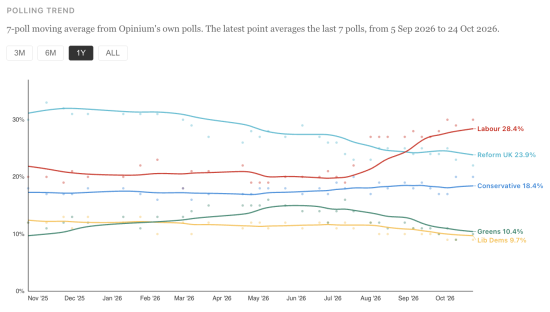 on 26 October 2026 by Richard Murphy
Over the weekend, the latest opinion polls suggested Labour might now have 30% electoral support, with Reform enjoying 22%, the Conservatives at 20%, the Greens Read the full article...
- We have a better world to buildon 26 October 2026 by Richard Murphy
Elections, and election results, dominate this morning’s news. President Lula has won in Brazil, against expectations. The result is tight, with Lula winning just over Read the full article...
- Understanding Economics: Shareholder value
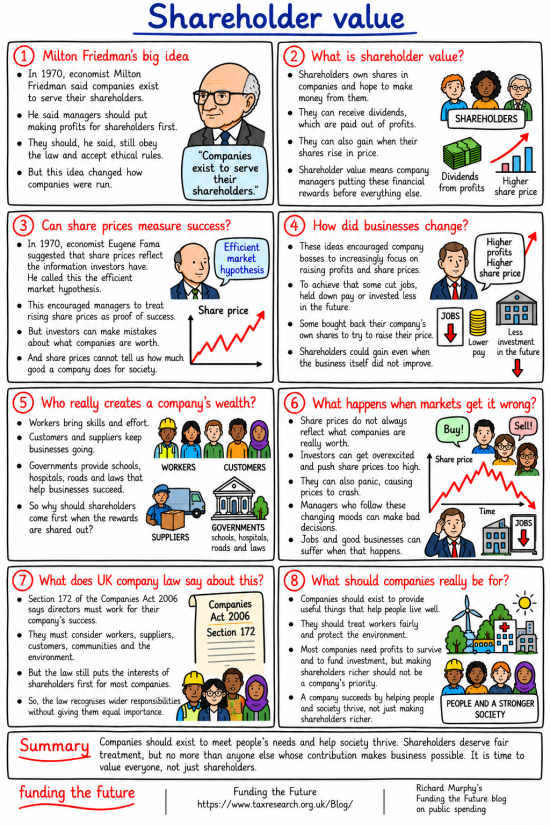 on 26 October 2026 by Richard Murphy
Should companies exist solely to make their shareholders richer? For decades, the idea of shareholder value has dominated corporate management, but I argue that this Read the full article...
- BBC1 v birdwatchingon 25 October 2026 by Richard Murphy
I appeared on the BBC’s Sunday Morning Live programme today. You can, no doubt, find it on iPlayer, and the section that I took part Read the full article...
Posts from Bill Mitchell – Modern Monetary Theory
- The intersection of neoliberalism and traditional Japanese values – Part 2on 26 October 2026 by bill
Neoliberalism has scammed everyone. It told citizens that if we were liberated from government regulations and government control of enterprises that delivered essential services then we would attain the best possible outcomes that were available. A barrage of messaging from media companies blatantly serving the interests of capital and think tanks masquerading as independent research…
- The intersection of neoliberalism and traditional Japanese values – Part 1on 22 October 2026 by bill
In the West, particularly the English-speaking world, neoliberalism seemed to easily replace the collectivist values of the full employment era that followed the Second World War. It constructed a world where individualism was prioritised over society, even though it claimed that society (all of us) would be better off by pursuing our own greedy interests.…
- Kyoto Report 2026 – 4on 20 October 2026 by bill
This weekly report will provide some insights into life for a westerner (me) who is working for an extended period at Kyoto University in Japan but who over the years of working here has increasingly began to understand the language and local cultural traditions. Signs I come across I had to go down into central…
- French protests reflect the dysfunctional architecture of the common currencyon 19 October 2026 by bill
The social instability in France is now spreading throughout Europe. Already there are mass protests in Spain and Portugal, Belgium, Italy, and Albania. In France, initially students began protesting over conditions in the schooling system, but the grievances and parties involved have broadened out and the increasingly chaotic scenes in Paris have spread out to…
- Australian labour market – further deterioration and there is worse to comeon 15 October 2026 by bill
The labour market contraction that I have been signalling for the last three months continued in September. The rising unemployment rate and the declining employment levels are all down to the work of the RBA and its ridiculous interest rate increases. Given the lag in interest rates impacting on the real economy, the current labour…
Other Modern Money Theory Proponents
Other MMT Discussion
- MMT For the British People (Facebook group)
- Modern Money Theory (MMT) Australia (Facebook group)
- Modern Money Theory Dank Meme Stash (Facebook group)
- Intro to MMT – Modern Monetary Theory (Facebook group)
- MMT Podcast (Christian Reilly) (Twitter)
- Activist #MMT, the podcast (Twitter)
- Money on the Left (Twitter) (Web site)
- MMT France (En français)
- Stephanie Kelton @ The Lens/Substack
- Modern Monetary Theory by Brooke Clarke